
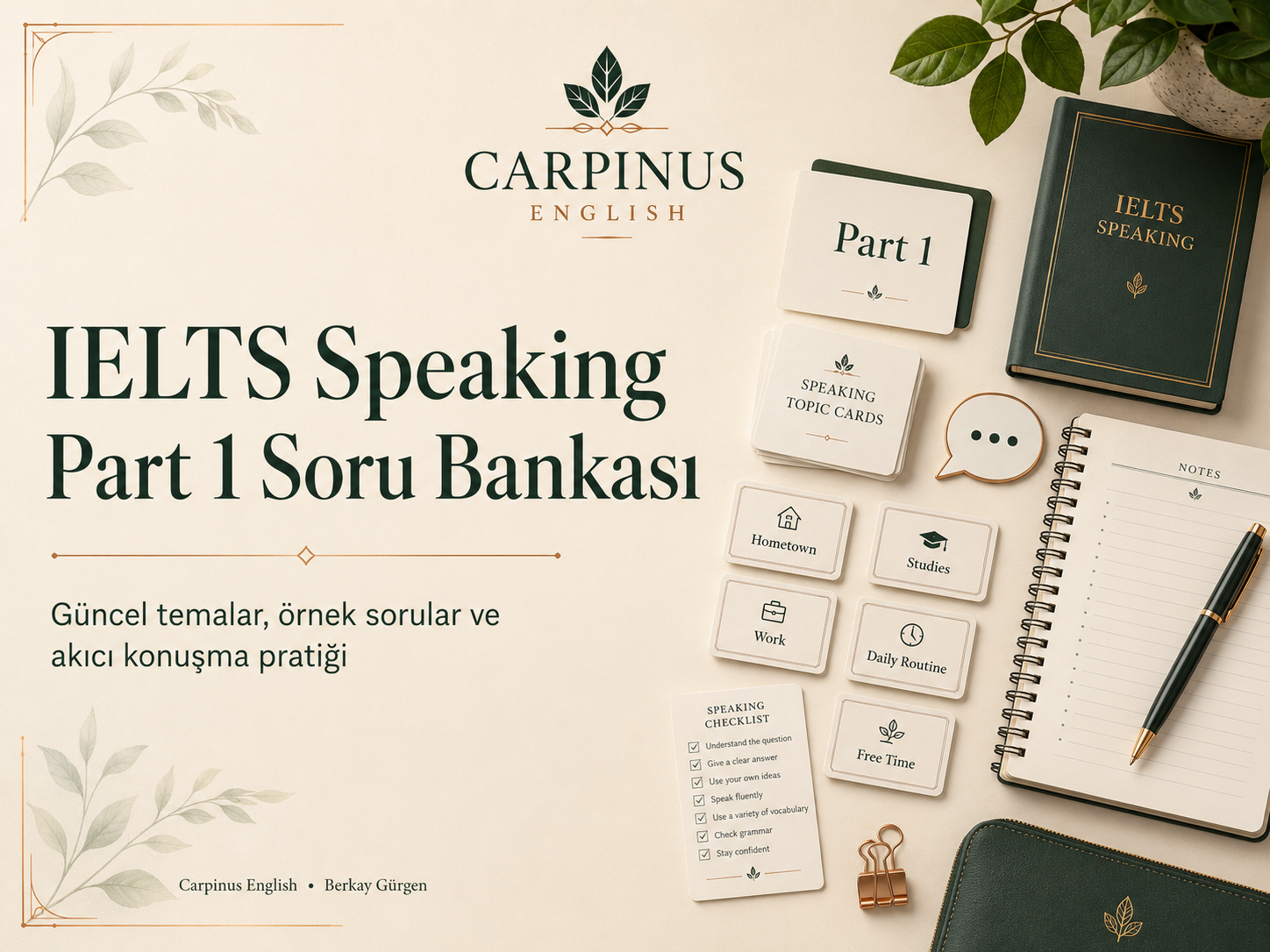
IELTS Speaking Part 1, IELTS Speaking sınavının ilk bölümüdür. Bu bölümde examiner size genellikle kendiniz, yaşadığınız yer, eğitim hayatınız, işiniz, hobileriniz, günlük alışkanlıklarınız ve kişisel tercihleriniz hakkında kısa sorular sorar.
Bu bölüm, sınava ısınma bölümü gibi görünse de aslında oldukça önemlidir. Çünkü Part 1’de verdiğiniz cevaplar, konuşma akıcılığınız, kelime kullanımınız, telaffuzunuz ve cümle kurma beceriniz hakkında ilk izlenimi oluşturur.
IELTS Speaking Part 1’de amaç uzun ve ezberlenmiş cevaplar vermek değildir. Daha doğal, açık, kısa ama geliştirilmiş cevaplar vermek gerekir. Bu yüzden bu yazıda, IELTS Speaking Part 1 için farklı konularda özgün sorular ve cevaplama taktikleri bulabilirsiniz.
IELTS Speaking Part 1’de Nasıl Cevap Verilmeli?
IELTS Speaking Part 1 sorularına cevap verirken tek kelimelik veya çok kısa cevaplardan kaçınmak gerekir. Örneğin examiner “Do you like reading?” diye sorduğunda sadece “Yes, I do.” demek yeterli değildir.
Daha iyi bir cevap şöyle olabilir:
Yes, I do. I usually read short articlesarticleİngilizcede isimlerden önce kullanılan a, an ve the kelimeleridir.Örnek: The article changes the meaning of the noun.Detaylı sayfayı gör → or novels in the evening because it helps me relax after a busy day.
Bu cevap daha güçlüdür çünkü:
- Soruyu doğrudan cevaplar.
- Küçük bir açıklama verir.
- Doğal bir sebep ekler.
- Basit ama etkili bir cümle yapısı kullanır.
IELTS Speaking Part 1 için kullanabileceğiniz basit cevap formülü şudur:
Answer + Reason + Example / Detaildetail questionMetindeki belirli bir ayrıntıyı bulmayı isteyen soru türüdür.Örnek: Detail questions often require scanning.Detaylı sayfayı gör →
Örnek:
Question: Do you enjoy cooking?
Answer: Yes, I do.
Reason: I find it relaxing.
Detailsupporting ideaAna fikri açıklayan veya geliştiren yardımcı düşüncedir.Örnek: Supporting ideas give more detail about the topic.Detaylı sayfayı gör →: I usually cook simple meals at home, especially pasta or vegetable dishes.
Tam cevap:
Yes, I do. I find it relaxing, especially after work. I usually cook simple meals at home, such as pasta or vegetable dishes.
Bu Yazıda Sunulan Sorular Nasıl Kullanılmalı?
Sadece okuyup geçmeyin. Her soruya sesli cevap vermeye çalışın. Mümkünse cevaplarınızı telefonunuza kaydedin ve daha sonra dinleyin.
Çalışırken şu adımları izleyebilirsiniz:
- Bir konu seçin.
- Her soruya 20–30 saniyelik cevap verin.
- Cevabınızda en az bir neden veya örnek kullanın.
- Kendinizi kaydedin.
- Çok tekrar ettiğiniz kelimeleri not alın.
- Aynı soruya ikinci kez daha doğal cevap vermeye çalışın.
Unutmayın, IELTS Speaking Part 1’de önemli olan ezber yapmak değil, tanıdık konularda hızlı ve doğal cevap verebilmektir.
IELTS Speaking Part 1 Soru Bankası
Aşağıdaki sorular IELTS Speaking Part 1 formatına uygun olarak hazırlanmış pratik sorularıdır. Sorular resmi sınav soruları değildir; sınava hazırlık ve konuşma pratiği amacıyla kullanılabilir.
1. Hometown – Memleket ve Yaşadığınız Yer
-
- Where is your hometown located?
- What do people usually like about your hometown?
- Has your hometown changed in recent years?
- Is your hometown a good place for young people?
- What is the most popular place in your hometown?
- Would you like to live in your hometown in the future?
- What kind of jobs are common in your hometown?
- Is your hometown more suitable for families or students?
- What do visitors usually do when they come to your hometown?
- What would you improve in your hometown if you could?
2. Home and Accommodation – Ev ve Yaşam Alanı
-
- Do you live in a house or an apartment?
- What is your favourite room in your home?
- How long have you lived in your current home?
- Is your home close to your school or workplace?
- What do you usually do at home in the evening?
- Would you prefer to live in a bigger home?
- What makes a home comfortable for you?
- Do you like decorating your room?
- Is your neighbourhood quiet or busy?
- Would you like to move to another city in the future?
3. Work and Study – İş ve Eğitim
-
- Do you work or are you a student?
- Why did you choose your field of study or job?
- What do you enjoy most about your studies or work?
- Is there anything difficult about your studies or work?
- Do you prefer working alone or with others?
- What skills are important for your studies or job?
- Do you use English in your studies or work?
- What was your favourite subject at school?
- Would you like to change your job or field in the future?
- What kind of work environment do you prefer?
4. Daily Routine – Günlük Rutin
-
- What time do you usually wake up?
- Do you have a busy daily routine?
- What is the most important part of your day?
- Do you prefer mornings or evenings?
- How do you usually spend your evenings?
- Has your daily routine changed recently?
- What do you do when you have free time during the day?
- Do you like planning your day in advance?
- What part of your routine would you like to change?
- Are weekends very different from weekdays for you?
5. Hobbies and Free Time – Hobiler ve Boş Zaman
-
- What do you usually do in your free time?
- Do you prefer indoor or outdoor activities?
- Did you have a hobby when you were a child?
- Would you like to try a new hobby?
- Do you think hobbies are important?
- How much time do you spend on your hobbies?
- Do you prefer relaxing or active hobbies?
- Have your hobbies changed over time?
- Do you like doing hobbies alone or with friends?
- What hobby is popular in your country?
6. Food and Cooking – Yemek ve Yemek Yapma
-
- What kind of food do you like most?
- Do you prefer eating at home or eating out?
- Can you cook well?
- What food did you often eat as a child?
- Do you like trying food from other countries?
- Is there any food you dislike?
- Do you think healthy eating is important?
- What is a popular traditional food in your country?
- Do you usually have breakfast?
- Would you like to improve your cooking skills?
7. Travel and Holidays – Seyahat ve Tatil
-
- Do you like travelling?
- What kind of places do you like visiting?
- Do you prefer travelling alone or with others?
- What was your last holiday like?
- Is there a country you would like to visit?
- Do you prefer beach holidays or city holidays?
- What do you usually take with you when you travel?
- Do you like planning trips in detail?
- What is the best way to learn about a new place?
- Would you like to travel more in the future?
8. Technology – Teknoloji
-
- What technology do you use every day?
- Do you think smartphones make life easier?
- How often do you use the internet?
- Do you prefer texting or calling people?
- What app do you use most often?
- Do you think technology helps students learn better?
- Is there any technology you find difficult to use?
- How has technology changed communication?
- Do you spend too much time on your phone?
- What kind of technology would you like to have in the future?
9. Reading and Books – Okuma ve Kitaplar
-
- Do you enjoy reading?
- What kind of books do you like?
- Did you read a lot when you were a child?
- Do you prefer printed books or e-books?
- How often do you read articles online?
- What was the last thing you read?
- Do you think reading is important for students?
- Do people in your country read a lot?
- Would you like to read more in the future?
- What makes a book interesting for you?
10. Music and Entertainment – Müzik ve Eğlence
-
- Do you like listening to music?
- What kind of music do you usually listen to?
- Do you prefer listening to music alone or with others?
- Can you play a musical instrument?
- Did you listen to the same music when you were younger?
- Do you like going to concerts?
- How often do you watch films or series?
- Do you prefer watching films at home or at the cinema?
- What kind of entertainment is popular in your country?
- Does music help you concentrate?
11. Friends and Family – Arkadaşlar ve Aile
-
- Do you spend a lot of time with your family?
- Who are you closest to in your family?
- Do you prefer having a few close friends or many friends?
- How often do you meet your friends?
- What do you usually do with your friends?
- Is friendship important to you?
- Do you think family relationships have changed in recent years?
- Do you prefer talking to friends online or face to face?
- What qualities make a good friend?
- Did you have many friends when you were a child?
12. Shopping and Clothes – Alışveriş ve Kıyafet
-
- Do you enjoy shopping?
- What do you usually buy when you go shopping?
- Do you prefer shopping online or in stores?
- How often do you buy new clothes?
- Is fashion important to you?
- What kind of clothes do you usually wear?
- Do you like wearing formal clothes?
- Have your clothing preferences changed over time?
- Do people in your country care about fashion?
- What was the last thing you bought?
13. Sports and Exercise – Spor ve Egzersiz
-
- Do you like doing sports?
- What sport is popular in your country?
- Do you prefer watching or playing sports?
- How often do you exercise?
- Did you play any sports as a child?
- Do you think schools should encourage sports?
- What kind of exercise do you find enjoyable?
- Do you prefer exercising indoors or outdoors?
- Is it difficult to stay active nowadays?
- Would you like to try a new sport?
14. Weather and Seasons – Hava Durumu ve Mevsimler
-
- What is the weather usually like in your city?
- What is your favourite season?
- Do you prefer hot or cold weather?
- Does the weather affect your mood?
- What do you usually do on rainy days?
- Is there a season you dislike?
- Has the weather in your country changed in recent years?
- Do you check the weather forecast often?
- What kind of weather is good for studying?
- Would you like to live in a country with a different climate?
15. Transportation – Ulaşım
-
- How do you usually travel around your city?
- Do you prefer public transport or private cars?
- Is traffic a problem where you live?
- Do you enjoy walking?
- How often do you use buses or trains?
- What is the most convenient way to travel in your city?
- Would you like to ride a bicycle more often?
- Do you think public transport should be improved?
- How did you go to school when you were younger?
- What kind of transportation do you use when travelling long distances?
16. Learning English – İngilizce Öğrenme
-
- When did you start learning English?
- What do you find difficult about learning English?
- Do you enjoy speaking English?
- How do you usually improve your vocabulary?
- Do you prefer learning English alone or with a teacher?
- What English skill do you want to improve most?
- Do you watch films or videos in English?
- Is English important for your future?
- Have you ever taken an English exam before?
- What advice would you give to someone learning English?
17. Social Media – Sosyal Medya
-
- Do you use social media often?
- Which social media platform do you use most?
- Do you think social media is useful?
- Do you prefer posting photos or just viewing content?
- Has social media changed the way people communicate?
- Do you follow educational pages online?
- Is it easy to spend too much time on social media?
- Do you think children should use social media?
- What kind of content do you like seeing online?
- Would you like to use social media less?
18. Art and Creativity – Sanat ve Yaratıcılık
-
- Do you like art?
- Did you enjoy drawing or painting as a child?
- Do you ever visit museums or galleries?
- Do you think art classes are important at school?
- What kind of creative activity do you enjoy?
- Are people in your country interested in art?
- Do you prefer modern art or traditional art?
- Is creativity important in daily life?
- Would you like to learn a creative skill?
- Do you think technology affects art?
19. Environment – Çevre
-
- Do you care about the environment?
- What environmental problem is common in your city?
- Do you recycle anything at home?
- How can people reduce waste?
- Do you prefer using reusable bags?
- Is air pollution a problem where you live?
- Do you think young people care about nature?
- What can schools do to teach environmental awareness?
- Do you enjoy spending time in nature?
- Would you like to live in a greener city?
20. Future Plans – Gelecek Planları
-
- What are your plans for the next few years?
- Would you like to study or work abroad?
- Is there a skill you want to learn in the future?
- What kind of job would you like to have?
- Do you usually make long-term plans?
- Would you like to live in another country?
- What is one goal you want to achieve soon?
- Do your plans change often?
- How important is English for your future plans?
- What do you think your life will be like in ten years?
IELTS Speaking Part 1 İçin Örnek Cevaplar
Aşağıdaki örnek cevaplar, IELTS Speaking Part 1’de nasıl daha doğal ve geliştirilmiş cevap verilebileceğini göstermek için hazırlanmıştır.
Soru 1: Do you like travelling?
Kısa cevap:
Yes, I do.
Daha iyi cevap:
Yes, I do. I really enjoy visiting new places because it helps me experience different cultures and take a break from my daily routine. I especially like short city trips because they are easier to plan.
Soru 2: Do you prefer studying in the morning or in the evening?
Kısa cevap:
In the morning.
Daha iyi cevap:
I prefer studying in the morning because I feel more focused and energetic. In the evening, I usually get tired, so it becomes harder for me to concentrate for a long time.
Soru 3: Is technology important in your life?
Kısa cevap:
Yes, it is.
Daha iyi cevap:
Yes, definitely. I use technology every day for communication, studying and entertainment. For example, I often use online dictionaries and educational videos when I study English.
Soru 4: Do you enjoy reading?
Kısa cevap:
Sometimes.
Daha iyi cevap:
Yes, but I usually prefer short articles rather than long books. I like reading about education, lifestyle and technology because these topics are useful in daily life.
Soru 5: What do you usually do with your friends?
Kısa cevap:
We go out.
Daha iyi cevap:
We usually meet for coffee or go for a walk. I enjoy spending time with my friends because it helps me relax and talk about things outside work or school.
IELTS Speaking Part 1’de Yapılan Yaygın Hatalar
IELTS Speaking Part 1 kısa bir bölüm olsa da adaylar bazı basit hatalar nedeniyle performansını sınırlayabilir.
1. Çok kısa cevap vermek
Sadece “Yes”, “No” veya “I don’t know” gibi cevaplar vermek yeterli değildir. Her cevaba kısa bir sebep veya örnek eklemek gerekir.
Zayıf cevap:
Yes, I do.
Daha iyi cevap:
Yes, I do. I like listening to music while walking because it makes me feel more relaxed.
2. Ezberlenmiş cevap kullanmak
IELTS Speaking’de tamamen ezberlenmiş cevaplar doğal durmaz. Examiner, cevabınızın konuya uygun ve spontane olup olmadığını anlayabilir. Bu yüzden kalıp ezberlemek yerine cevap geliştirme mantığını öğrenmek daha doğrudur.
3. Soruyu genişletmeden cevaplamak
Part 1’de cevaplar çok uzun olmamalı ama tamamen yüzeysel de kalmamalıdır. Genellikle 2–3 cümlelik cevaplar yeterlidir.
4. Sürekli aynı kelimeleri tekrar etmek
“I like it because it is good” gibi çok genel ifadeler yerine daha net kelimeler kullanmaya çalışın.
Örneğin:
-
- useful
- relaxing
- convenient
- enjoyable
- practical
- stressful
- challenging
- time-consuming
- memorable
- comfortable
5. Grammar doğruluğunu tamamen unutmak
Speaking’de akıcılık önemlidir; ancak çok fazla temel grammar hatası yapmak puanı etkileyebilir. Özellikle tense kullanımı, subject-verb agreement ve article hatalarına dikkat etmek gerekir.
IELTS Speaking Part 1 İçin Kullanışlı Cevap Kalıpları
Aşağıdaki kalıplar cevaplarınızı daha doğal şekilde geliştirmenize yardımcı olabilir.
Fikir belirtmek için
- I think…
- In my opinion…
- I would say that…
- Personally, I believe…
Sebep vermek için
- because…
- mainly because…
- the reason is that…
- one reason is…
Örnek vermek için
- For example…
- For instance…
- A good example is…
- To give an example…
Tercih belirtmek için
- I prefer…
- I would rather…
- I tend to choose…
- I usually go for…
Zamanla değişim anlatmak için
- In the past, I used to…
- These days, I usually…
- Compared to before…
- My habits have changed because…
Kararsız cevap vermek için
- It depends.
- I’m not completely sure, but…
- I haven’t thought about it much, but…
- I suppose…
En önemlisi ise, IELTS Speaking Düzenli Pratikle Gelişir.
IELTS Speaking Part 1, adayın günlük ve tanıdık konularda İngilizce konuşma becerisini ölçen önemli bir bölümdür. Bu bölümde başarılı olmak için çok karmaşık cümleler kurmak zorunda değilsiniz. Önemli olan soruyu anlamak, net cevap vermek, cevabı kısa bir sebep veya örnekle geliştirmek ve doğal konuşma akışını korumaktır.
IELTS Speaking hedefinize ulaşmak için sadece soru okumakla yetinmeyin; her gün kısa ama düzenli konuşma pratiği yapın. Doğru strateji, özgün cevaplar ve düzenli tekrar ile IELTS Speaking Part 1’de daha güçlü bir performans gösterebilirsiniz.
İlgili Yazılar
IELTS SPEAKING Part 2 Cue Card Örnekleri
⌛ Okuma süresi: 15 dkIELTS Speaking Part 2, IELTS Speaking sınavının uzun konuşma bölümüdür. Bu bölümde adaya bir…
Yazıyı Oku
IELTS Band Score Ne Demek? IELTS Puanı Nasıl Hesaplanır?
⌛ Okuma süresi: 15 dkIELTS Band Score Nedir? IELTS bandband scoreIELTS sınavında 0 ile 9 arasında verilen puan…
Yazıyı Oku
IELTS WRITING Task 2 Essay Türleri
⌛ Okuma süresi: 15 dkIELTS Writing Task 2 Nedir? IELTS Writing Taskintegrated writingTOEFL Writing’de okuma ve dinleme bilgilerini…
Yazıyı Oku